
 English
 Español
 Indonesia
 Tiếng Việt
держатель инструмента
Tool Holder: An Essential Component in Machining A tool holder is a critical component in machining operations, serving as the interface between the cutting tool and the machine spindle. It ensures precise tool positioning, stability, and efficient power transmission during cutting processes. Tool holders are widely used in milling, turning, drilling, and grinding applications across industries such as aerospace, automotive, and general manufacturing. Functions of a Tool Holder The primary function of a tool holder is to securely clamp the cutting tool while maintaining high rigidity and accuracy. It must minimize vibration and runout to ensure consistent machining quality. Additionally, tool holders facilitate quick tool changes, improving productivity in automated and high-volume production environments. Types of Tool Holders There are several types of tool holders, each designed for specific applications: 1. Collet Chucks – Commonly used in milling and drilling, collet chucks provide excellent concentricity and grip on round-shank tools. They are ideal for high-speed machining due to their balanced design. 2. End Mill Holders – These holders use a set screw to clamp end mills, offering strong gripping force for heavy-duty milling operations. 3. Hydraulic Tool Holders – Utilizing hydraulic pressure to expand and grip the tool, these holders offer superior damping properties, reducing vibration and improving surface finish. 4. Shrink Fit Holders – These employ thermal expansion to secure the tool, providing maximum rigidity and minimal runout for high-precision machining. 5. Milling Chucks – Designed for high-speed milling, milling chucks combine the benefits of collet chucks and end mill holders, offering both precision and high clamping force. 6. Turning Tool Holders – Used in lathes, these holders secure turning inserts and boring bars, ensuring stability during rotational cutting. Key Features of a Quality Tool Holder - High Rigidity – Minimizes deflection under cutting forces, improving accuracy. - Balanced Design – Essential for high-speed applications to prevent vibration. - Precision Runout Control – Ensures tight tolerances and superior surface finishes. - Durability – Made from hardened steel or other robust materials to withstand wear. - Compatibility – Must match machine spindle interfaces (e.g., BT, CAT, HSK). Importance in Machining Performance A well-chosen tool holder enhances machining efficiency by reducing tool wear, minimizing downtime, and improving part quality. Poor tool holding can lead to chatter, premature tool failure, and dimensional inaccuracies. Conclusion Tool holders play a vital role in modern machining, directly impacting productivity, precision, and tool life. Selecting the right type based on application requirements ensures optimal performance and cost-effectiveness in manufacturing processes.
продукт
классификация:
-
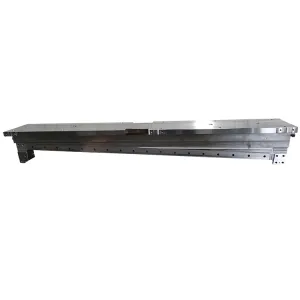
Держатель ножниц сварочного аппарата
Их классификация: Запасные части для пресс-форммнения: 52номер:Время выпуска: 2025-08-22 13:06:10Основная функция ножничной рамы сварочного аппарата — резка таких материалов, как стальные полосы. В процессе сварки стальной полосы необходимо отрезать головную и хвостовую часть полосы для последующих сварочных операций. Ножничная рама обеспечивает гладкую поверхность резки стальной полосы за счет точных операций резки, тем самым улучшая качество сварки. Если эффект резки ножничной рамы плохой, это может привести к снижению качества сварного шва стальной полосы, что повлияет на непрерывность всего производственного процесса и качество продукции.
новости
классификация:
Нет результатов поиска!
случай
классификация:
Нет результатов поиска!
видео
классификация:
Нет результатов поиска!
скачать
классификация:
Нет результатов поиска!
вербовка
классификация:
Нет результатов поиска!
Рекомендуемые продукты
Нет результатов поиска!

 Контактное лицо: г-н Ву
 Телефон: +86 18602539156
 Электронная почта: wuqi231138@126.com