
 English
 Español
 Indonesia
 Tiếng Việt
рабочие валки для разрушения мокрой окалины
Wet Scale Breaking on Work RollsIn the context of metal rolling processes, particularly in steel production, the phenomenon of "wet scale breaking" on work rolls is a critical aspect that directly impacts the quality of the final product, operational efficiency, and equipment longevity. Work rolls are essential components in rolling mills, responsible for reducing the thickness of metal slabs or strips through controlled deformation. However, during hot rolling, the formation of oxide scale on the metal surface and its interaction with the work rolls can lead to challenges, one of which is wet scale breaking.Understanding Wet Scale BreakingWet scale breaking occurs when water or coolant used during the rolling process interacts with the oxide scale formed on the metal surface. During hot rolling, the metal surface oxidizes rapidly due to exposure to high temperatures, forming a layer of scale. This scale can be brittle and prone to cracking or breaking under mechanical stress. When water or coolant is applied to cool the rolls or the metal strip, it can penetrate the cracks in the scale, leading to its detachment or fragmentation. This process is referred to as wet scale breaking.Causes and MechanismsSeveral factors contribute to wet scale breaking on work rolls:1. Temperature Gradient: The rapid cooling effect of water or coolant creates a significant temperature difference between the metal surface and the underlying layers. This thermal shock can cause the scale to crack or break.2. Scale Thickness and Adhesion: The thickness and adhesion strength of the oxide scale play a crucial role. Thicker or poorly adhered scale is more susceptible to breaking when exposed to water.3. Rolling Pressure: The mechanical pressure exerted by the work rolls can exacerbate the cracking of the scale, especially if the scale is already weakened by thermal or chemical factors.4. Coolant Application: Improper or excessive application of coolant can increase the likelihood of wet scale breaking. The timing, volume, and distribution of coolant are critical factors.Implications of Wet Scale BreakingWet scale breaking can have several negative consequences:1. Surface Quality: Detached scale particles can embed into the metal surface, leading to surface defects such as pits, scratches, or inclusions. This compromises the aesthetic and functional quality of the rolled product.2. Roll Wear: Scale particles can act as abrasives, accelerating the wear of work rolls. This increases maintenance costs and reduces the lifespan of the rolls.3. Operational Efficiency: Frequent scale breaking can disrupt the rolling process, requiring additional cleaning or reprocessing steps. This reduces overall productivity and increases downtime.4. Product Consistency: Inconsistent scale breaking can lead to variations in surface finish and mechanical properties, affecting the uniformity of the final product.Mitigation StrategiesTo address wet scale breaking, several strategies can be employed:1. Optimized Cooling: Adjusting the coolant application parameters, such as flow rate, temperature, and spray pattern, can minimize thermal shock and reduce scale breaking.2. Scale Control: Implementing pre-rolling treatments, such as descaling or controlled oxidation, can reduce the thickness and improve the adhesion of the oxide scale.3. Roll Maintenance: Regular inspection and maintenance of work rolls, including surface finishing and roll grinding, can reduce the impact of scale particles on roll wear.4. Process Monitoring: Advanced monitoring systems can detect early signs of scale breaking, allowing for timely adjustments to the rolling process.ConclusionWet scale breaking on work rolls is a complex phenomenon influenced by thermal, mechanical, and chemical factors. While it poses challenges to the rolling process, understanding its mechanisms and implementing targeted mitigation strategies can significantly improve product quality, operational efficiency, and equipment durability. By optimizing cooling practices, controlling scale formation, and maintaining work rolls, manufacturers can effectively manage wet scale breaking and enhance the overall performance of their rolling operations.
продукт
классификация:
-
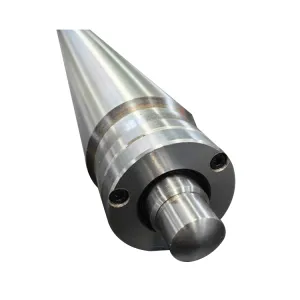
Рабочий валок для разрушения влажной окалины
Их классификация: Ролик для разрушения накипимнения: 43номер:Время выпуска: 2025-08-25 15:37:11Рабочие валки для мокрой окалины в основном используются для удаления оксидной окалины и примесей с металлических поверхностей, обеспечения гладкости поверхности металла и улучшения качества последующей обработки. Принцип его работы заключается в эффективном удалении оксидного слоя с поверхности металла и уменьшении повреждения металлической основы за счет сочетания воды или охлаждающей жидкости под высоким давлением и конструкции поверхности ролика.
новости
классификация:
Нет результатов поиска!
случай
классификация:
Нет результатов поиска!
видео
классификация:
Нет результатов поиска!
скачать
классификация:
Нет результатов поиска!
вербовка
классификация:
Нет результатов поиска!
Рекомендуемые продукты
Нет результатов поиска!

 Контактное лицо: г-н Ву
 Телефон: +86 18602539156
 Электронная почта: wuqi231138@126.com